
The Medicare Shared Savings Program (MSSP) is the largest federal initiative that promotes accountable care and value-based payment models. A central design feature of the program is its tiered approach to financial risk. ACOs generally begin in one-sided models and share in a portion of the savings generated but are insulated from losses if costs exceed benchmarks. Over time, ACOs transition to two-sided arrangements that include both shared savings and shared losses. This glidepath design reflects an important policy insight: organizations need time to develop the infrastructure, data capabilities, and care management processes required to successfully manage populations under risk. At the same time, the program allows more advanced organizations to enter directly into enhanced two-sided models, aligning their level of risk with their maturity.
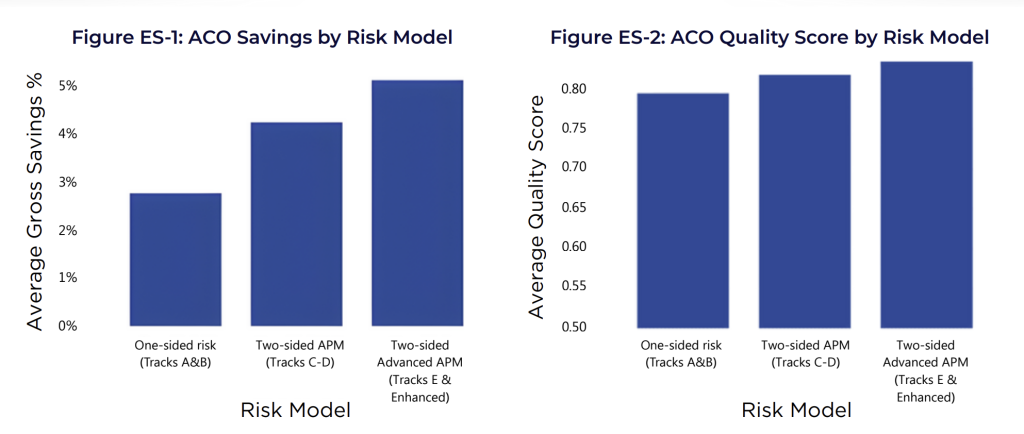
With several years of consistent performance data now available, we can evaluate whether this design is working as intended. The evidence suggests it is. ACOs that assume higher levels of risk and remain in the program for longer periods consistently achieve stronger outcomes. They generate higher gross shared savings, deliver stronger quality results, and demonstrate greater predictability as they mature. These trends reinforce the program’s central thesis: that accountable care, when approached with discipline and investment, creates measurable and compounding value.